About Fables and Myths
This week I stood on a stage with a lanyard around my neck and tried to say something true about building AI-native products at a Japanese company.
I’m Spanish. I work for Mercari. We arrived at 9:30 for a 10:00 start: a little makeup, a quick brief on how the session would run, and then onto the stage alongside two giants, NTT and Mizuho, doing my best to represent Mercari while juggling thoughts in three languages in my head. The panelists were excellent and the moderation was top notch.
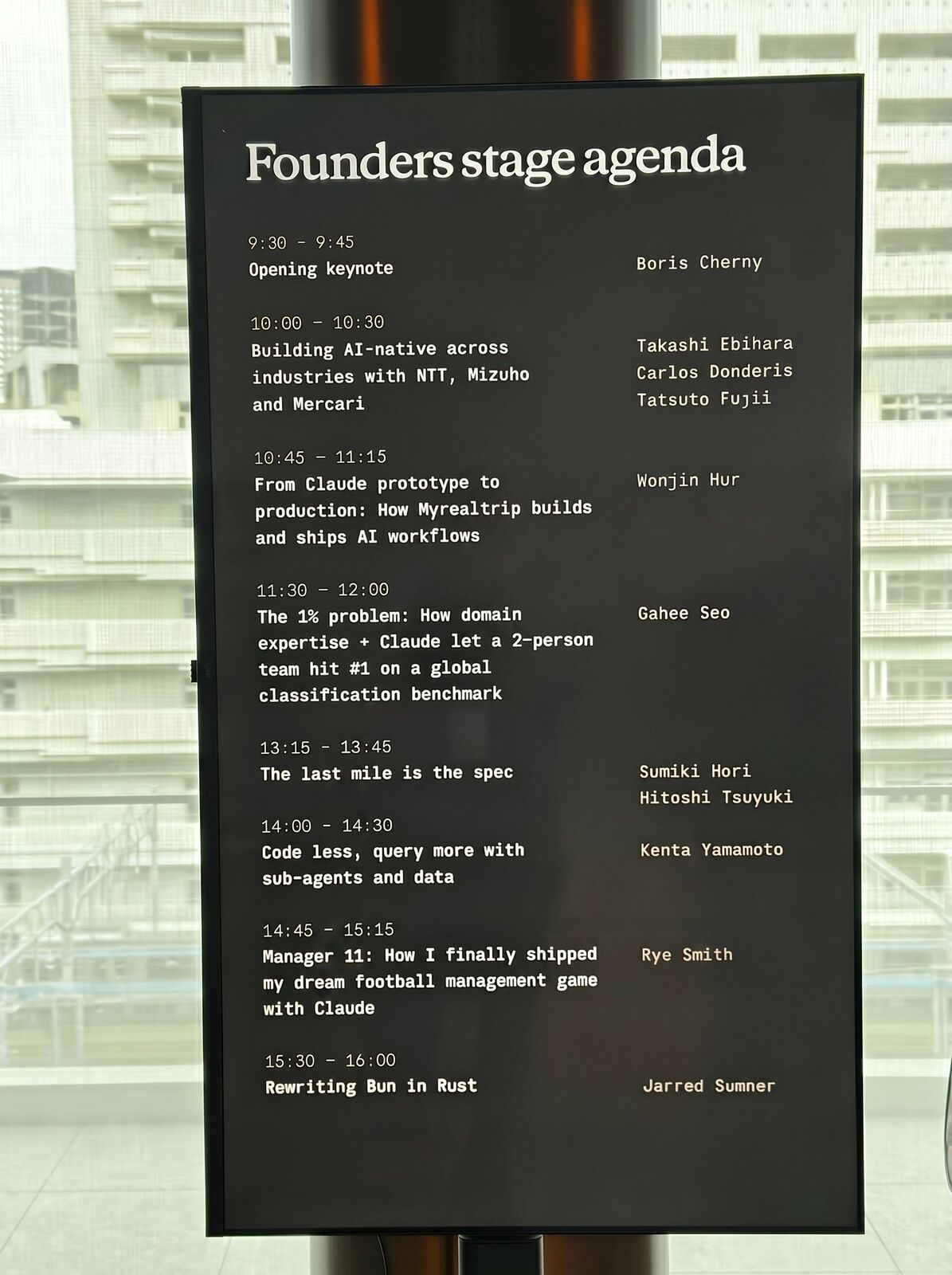
Founders stage agenda, Code w/ Claude Tokyo.
It went fine. But I want to write down the week, not the talk.
A Small Word on Top of a Big One
A few days before I got on that stage, Anthropic shipped Fable 5: its most powerful model available to the public. Fable is, in their own framing, a version of Mythos: the model I wrote about in April, the one they’d decided was too dangerous to ship. The public gets Fable, which falls back to Opus the moment you wander into cybersecurity or biology. The frontier itself, Mythos, stays behind a locked door.
I keep turning the names over. A fable is a small story, human-scaled, usually with animals and a quiet moral at the end. A mythos is the big one: the foundational narrative a whole culture stands on. Whoever named these models knew exactly what they were doing. The accessible thing is built on top of the enormous thing. The fable rests on the myth.
That ended up being the shape of my whole week.
The Myth Is Loud
The myth, right now, is hard to miss. On June 1st Anthropic confidentially filed its draft S-1 with the SEC (the paperwork that starts an IPO) on the back of a roughly $965 billion valuation and a revenue run-rate that’s gone from ten to forty-something billion in about a year. A debut north of a trillion dollars is now the base case, markets permitting.
And this is all happening barely a year after Claude Code launched as a research preview in February 2025. A command-line tool. Sixteen months from preview to the threshold of a trillion-dollar listing. That’s the myth: enormous, fast, and slightly unreal when you say the numbers out loud.
I find I don’t have much to add to the myth. It’s covered. What I got this week was the other layer.
Lunch, and the Forest You Can’t See
On Wednesday I had lunch with some industry leaders and a few people from Anthropic. Nothing formal. Good food, easy conversation, a couple of insights I wouldn’t have reached on my own.
That’s the part I keep underrating. You can’t see your own forest from inside your own trees. Innovation almost never arrives while you’re staring at your own house. It shows up sideways, from someone whose problems don’t look like yours. The research on this is unglamorous but consistent: the best ideas tend to come from the weak links across boundaries, not the strong ones inside your own team. I believe it more every time I leave the building. I’m just grateful to keep being invited to leave it.
Three Languages, One Mission
Back to the stage. Representing a Japanese company as a Spaniard means living on Erin Meyer’s communication axis in real time, translating not just between Spanish, English and Japanese, but between low-context directness and high-context restraint, deciding sentence by sentence how much to say out loud and how much to leave in the air.
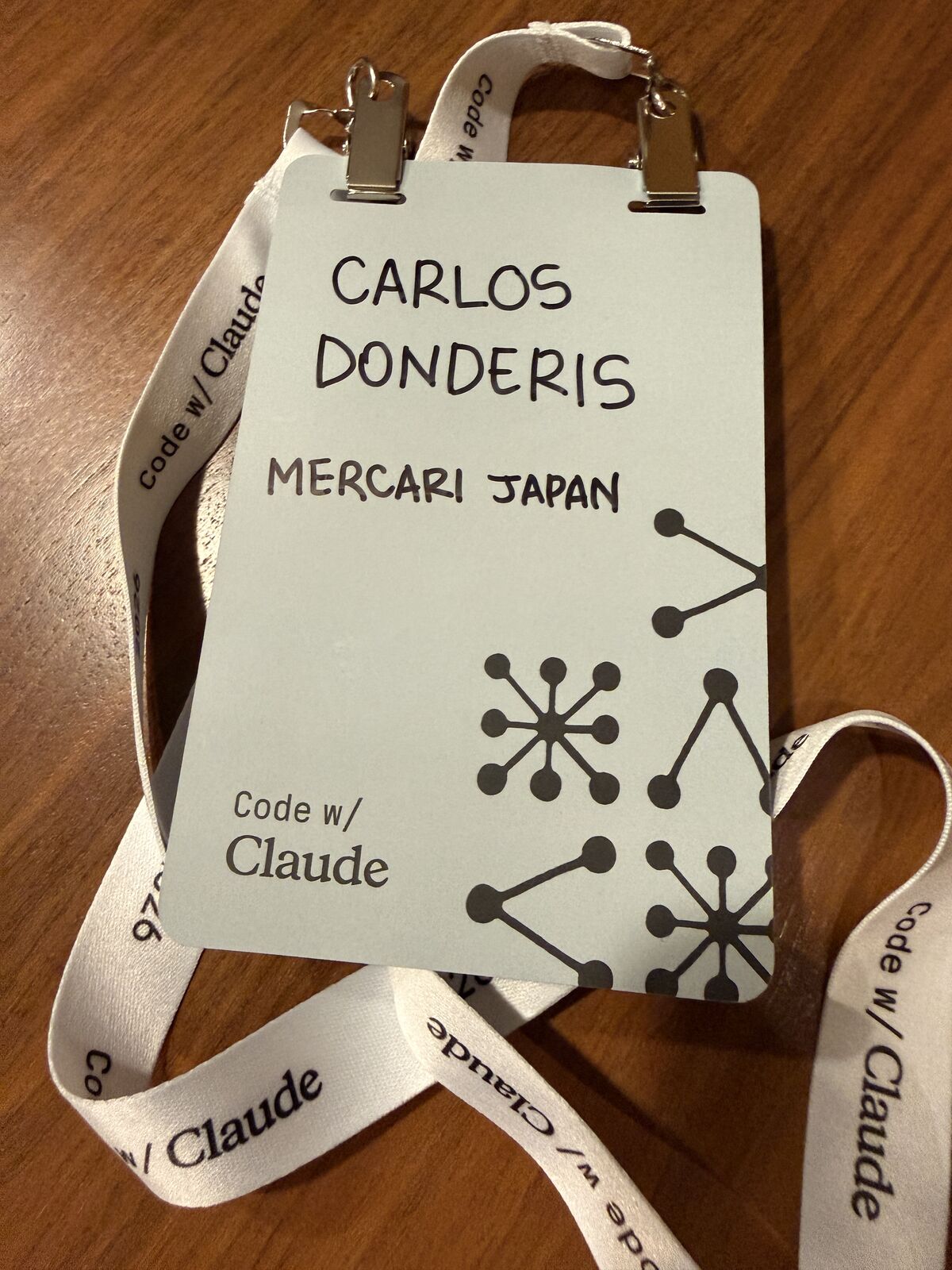
Code w/ Claude Tokyo.
It’s genuinely hard, and I’m not always good at it. What keeps me steady when the words won’t line up is that the mission underneath is clear, and it’s grounded in values I actually believe in. I’ve made a kind of peace with the improvisation, the same peace I wrote about when I stopped trying to predict the next six months. You plan enough, you show up, and you trust that the values hold even when the sentences wobble.
People With Nothing Left to Prove
The thing I’ll remember longest, though, is the people.
I spent a chunk of the week talking with members of the Anthropic team, including some of the people behind the tools I use every day. What struck me was small and consistent: they kept asking for feedback. Not performatively: they’d listen, then offer an idea or a fix back. For a company sprinting at the edge of its own capacity, that openness was refreshing.
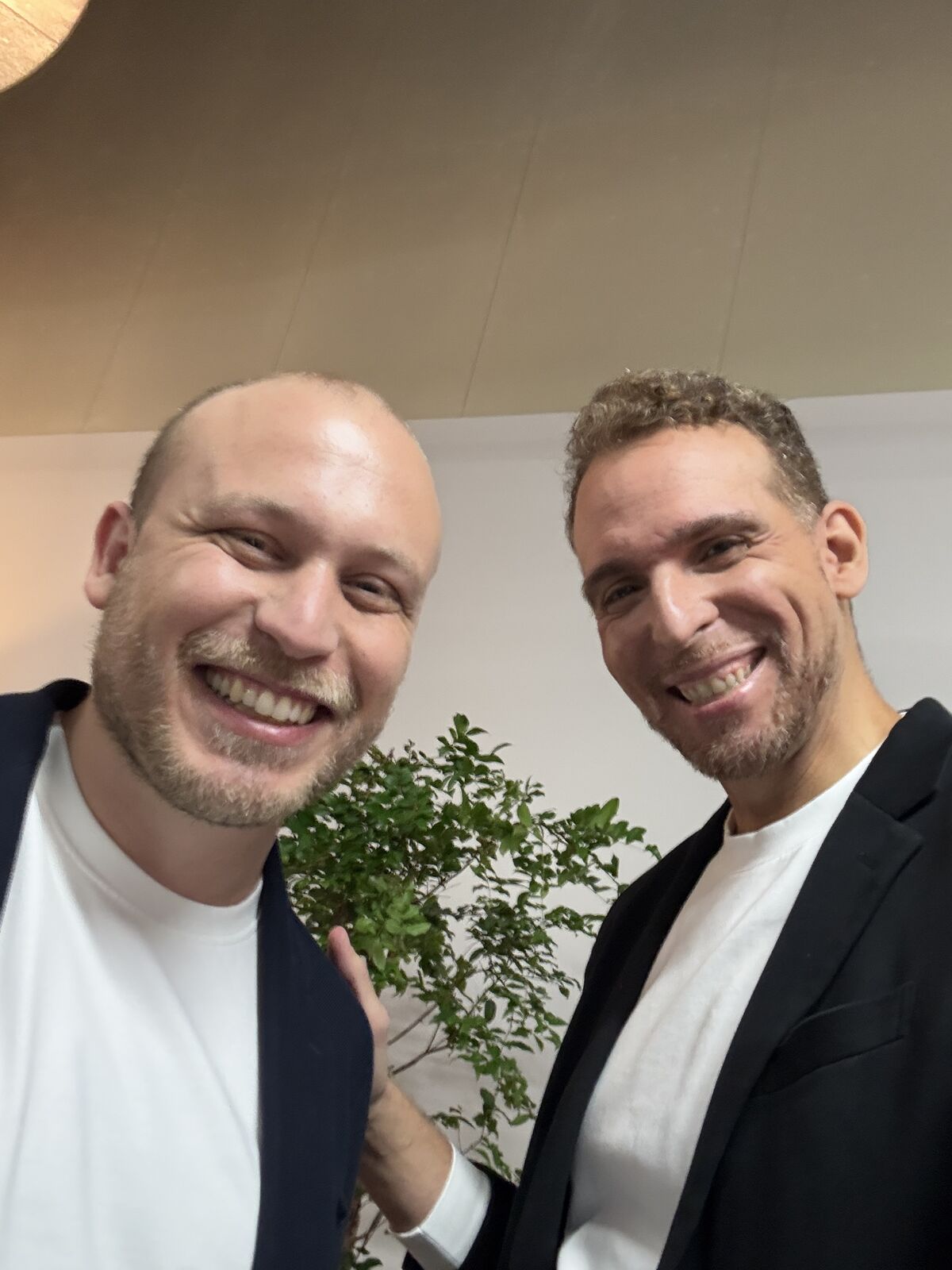
Code w/ Claude Tokyo.
When you spend your career as a big fish in small ponds, and then you get to talk to a whale in the open ocean, you notice something. The best people are usually the ones who don’t need to prove anything anymore. They’ve stopped performing expertise; they just love the thing they build and want it to be good. It’s quiet, and it’s rare, and it made me reflect on a few things I’ll probably try to put into words another day.
What Fable Actually Did
I also got to use the new model, not just read about it.
Two days ago I pointed Opus at a service I’d been wanting to build. I fed it a lot of context and, through tools, a pile of code examples to source from, and let it write the spec on its own. An hour and a half of autonomous writing, and it produced something genuinely detailed. The next morning I handed that spec to Fable and asked for the end-to-end implementation. Two and a half hours of autonomous coding later, it was done. A lot of tokens. A real working thing.
This is the part the conference agenda quietly agreed on: one of the talks was literally titled The last mile is the spec. It maps to the whole spec-driven turn the field has taken: the spec is the prompt, and the bottleneck has moved from typing code to describing intent well enough that a machine can carry it the rest of the way. Opus wrote the description; Fable did the carrying.
It is not cheap. Fable runs at roughly double Opus pricing, and you feel it. I honestly don’t know how much I’ll reach for it once it’s out of my Max plan. But this was a leap, and I came away with the same humility I keep landing on: the tool got more powerful, and the gap is now mine. I need to learn to use it better. Power without direction is just an expensive way to go fast to nowhere.
The Workhorses Underneath
Which is why the model I’m actually most curious about isn’t the flagship.
For the things our customers touch, latency is the product. A frontier model that thinks for thirty seconds is the wrong tool for a screen someone is waiting on. What I want for customer-facing work is high capability at low latency and sane cost, the kind of thing the next Haiku and Sonnet are meant to be. The smart move in 2026 isn’t one model for everything; it’s routing: the hard, rare problems to the flagship, the high-volume ones to the workhorses. Use Fable to write the spec. Serve customers with something lean.
Maintaining that many models at once must be genuinely hard. I don’t envy the people deciding which gets served how during peak hours. But selfishly, I’m waiting on the workhorses more than the headliner.
Fables and Myths
So that was the week. An S-1 and a trillion-dollar number on one side; a lunch, a lanyard, a stage, and a couple of good conversations on the other.
The myth is what makes the headlines: the valuation, the dangerous model behind the locked door, the curve going up and to the right. But it turns out the part I’ll keep is the fable. The smaller story. Getting to learn how a company like this actually works. Getting the chance to fumble through three languages and say something true anyway. Getting to watch people who’ve already won keep asking what they could do better.
The headline is the myth. The meaning was in the fable resting on top of it.